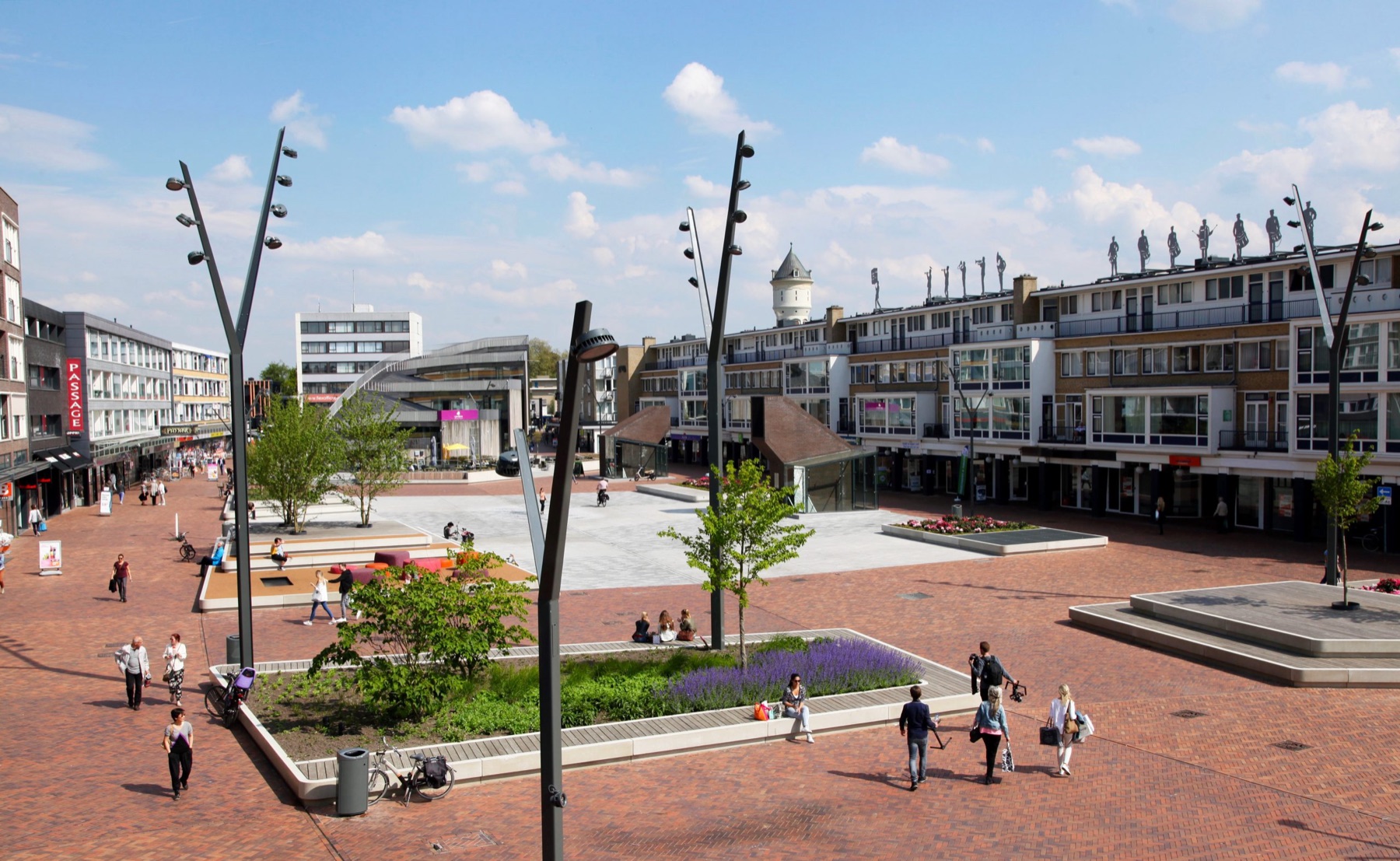



In Roosendaal, around 500 public litter bins are fitted with Rebin sensors. Emptying is done by two different parties: social enterprise WVS and green maintenance company Idverde. Without a central overview, it was hard to align their planning and routes.
The challenge
Before Rebin, the bins were emptied on fixed schedules and routes, regardless of their fill level. That meant around 2,500 emptyings every week. On top of that, collector Idverde was on the road for a full day with three vehicles.
Moreover, the two collectors did not share a single overview of the fill levels. As a result, many bins were emptied while they were nowhere near full enough.
The approach
Rebin fitted the bins with fill-level sensors that continuously measure how full they are. That data goes straight to the Rebin platform.
WVS and Idverde use the same platform, but each gets its own routes based on the current fill levels. The municipality keeps the overview through a single dashboard. Only bins that are at least 60% full are scheduled for emptying.
“With two collectors in the field, coordination was always a challenge. Thanks to Rebin, WVS and Idverde now work with the same real-time data. Everyone knows which bins are full, and we only drive where it is really needed.”
Results
Today, fewer than 1,000 bins are emptied each week, compared with 2,500 before Rebin. That means a considerable reduction in the number of emptyings and far fewer unnecessary trips.
Operations at Idverde changed drastically too: where three vehicles used to be on the road for a full day, a single employee now completes the entire collection round.
Because the bins are emptied based on their actual fill level, complaints about overflowing bins have also dropped sharply. All in all, the municipality has saved €80,000 a year since the system was introduced.